Miles Pierre
December 30th 2025


Photo Credit: Miles Pierre (White Rhinoceros)
Hidden along the edge of Etosha National Park, located in Namibia, Africa, lies Ongava Game Reserve, a place few ever see and even fewer will fully understand. This reserve plays a critical role in safeguarding one of the world’s most endangered species: the White rhinoceros.
Ongava Reserve is widely regarded as one of the most important white rhino strongholds in Namibia today. Unlike open national parks, where thousands of visitors pass through daily, Ongava operates with intentional restriction.
Jesaya Kapona, one of Ongava’s guides, has spent over twenty years calling this reserve his second home. Before guiding guests through the savannah plains and the flat lands of Etosha, Kapona served nearly six years in an anti-poaching unit, protecting wildlife under constant threat. One of Ongava’s most defining and bold choices is its refusal to dehorn its rhinos.
“There were only six at the beginning, but now we are so happy we have quite a high population of rhinos in conservation,” says Kapona. “Most of Africa’s reserves and national parks dehorn the rhinos in terms of preventing poaching, but Ongava is one of the conservation areas where you find both black and white rhinos with full horns.”
Across many countries in Africa, dehorning has become a preventative response to poaching. Ongava, however, has taken a different approach. Here, rhinos are allowed to exist as nature intended: fully horned, fully protected, but also fully vulnerable.

Photo Credit: Miles Pierre (White Rhinoceros)
Security at Ongava Reserve is always constant, and rhinos are tracked every day and night. While poaching remains one of the greatest global threats to their survival, rangers and anti-poaching units operate behind the scenes, often unseen, working long hours in silence to ensure safety of these creatures.
“Our team is always out either at night or in the day, just to make sure that we still protect the safety of both our white and black rhinos on the reserve,” Kapona says. “but we also need to teach others in ways such as photography, in terms of protecting and looking after the nature for the next generation.”
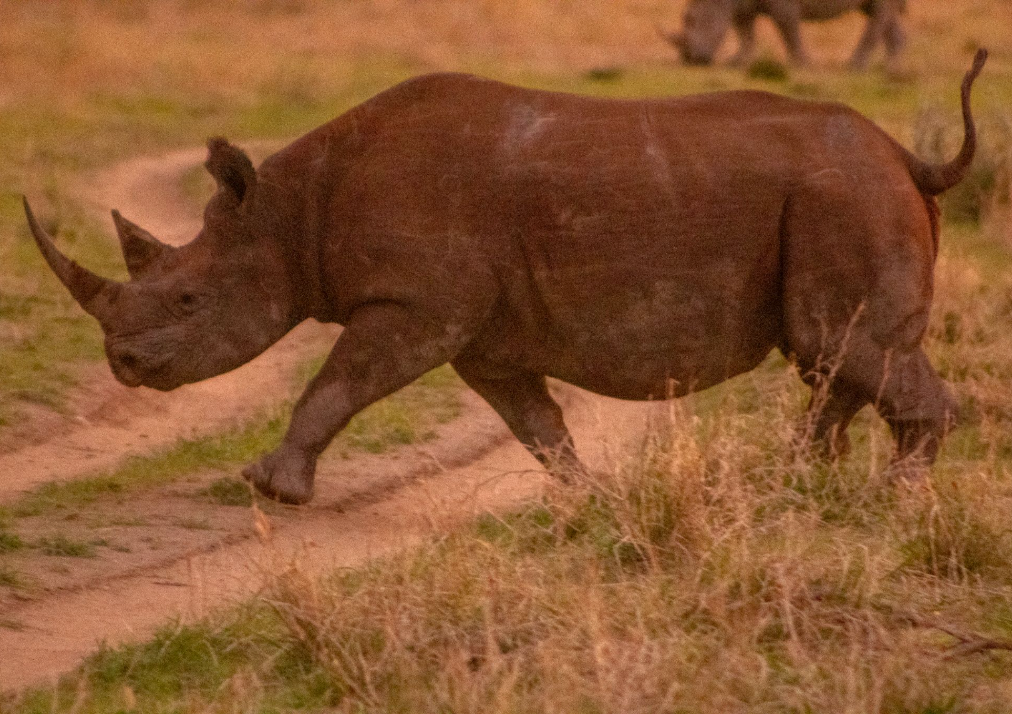
Photo Credit: Miles Pierre (Black Rhinoceros)
Protecting the less-bulky but more aggressive Black rhinoceros, however, presents a different challenge altogether. Unlike their larger relatives, black rhinos at Ongava are part of a government-led conservation initiative. These animals are more elusive, more territorial, and cannot integrate with white rhinos despite their visual similarities. They share land, but not behavior, and yet, the mission remains the same. Protect at all costs.
Looking ahead ten years, Kapona envisions Ongava as one of the leading conservation areas of white rhino on the continent, known not just for its success, but for its integrity. Namibia already holds nearly half of the world’s black rhino population, a testament to what focused conservation can achieve. But success does not signal rest. It signals responsibility.
Jesaya Kapona’s final words to guests are an invitation, one rooted in pride and purpose.
“I think in the next 10 years, Ongava will be one of the best conservation areas on the continent. Tell friends, colleagues, and neighbors that if they come to the southern part of Africa, the team is ready for them.”
While both the white and black rhinoceros still walk these lands in vulnerable numbers, the staff of Ongava Game Reserve continue to stand watch as guardians of a place where the rhinos can live and thrive without the outside dangers of poaching. And as long as they do, these mighty and fascinating giants will continue to live to see another day for years to come.